



Hyundai Brake Service in Merrillville: Signs, Timing, and What to Expect at Webb Hyundai Merrillville
Hyundai Brake Service in Merrillville: Signs, Timing, and What to Expect at Webb Hyundai Merrillville
Your brakes are your most important safety system. Here’s how Northwest Indiana drivers know when it’s time, and what factory-certified brake service looks like.
Brakes wear gradually, which is exactly why so many drivers ignore them until something feels wrong. By then, a simple pad replacement may have turned into rotor damage and a bigger repair bill. At Webb Hyundai Merrillville, our factory-trained service team inspects your brakes at every visit and helps you stay ahead of wear — so your Tucson, Santa Fe, Palisade, Elantra, or IONIQ stops confidently every time. This guide explains how Hyundai brakes work, the warning signs Merrillville drivers should never ignore, and what to expect when you bring your vehicle in.
How Does My Hyundai’s Brake System Work?
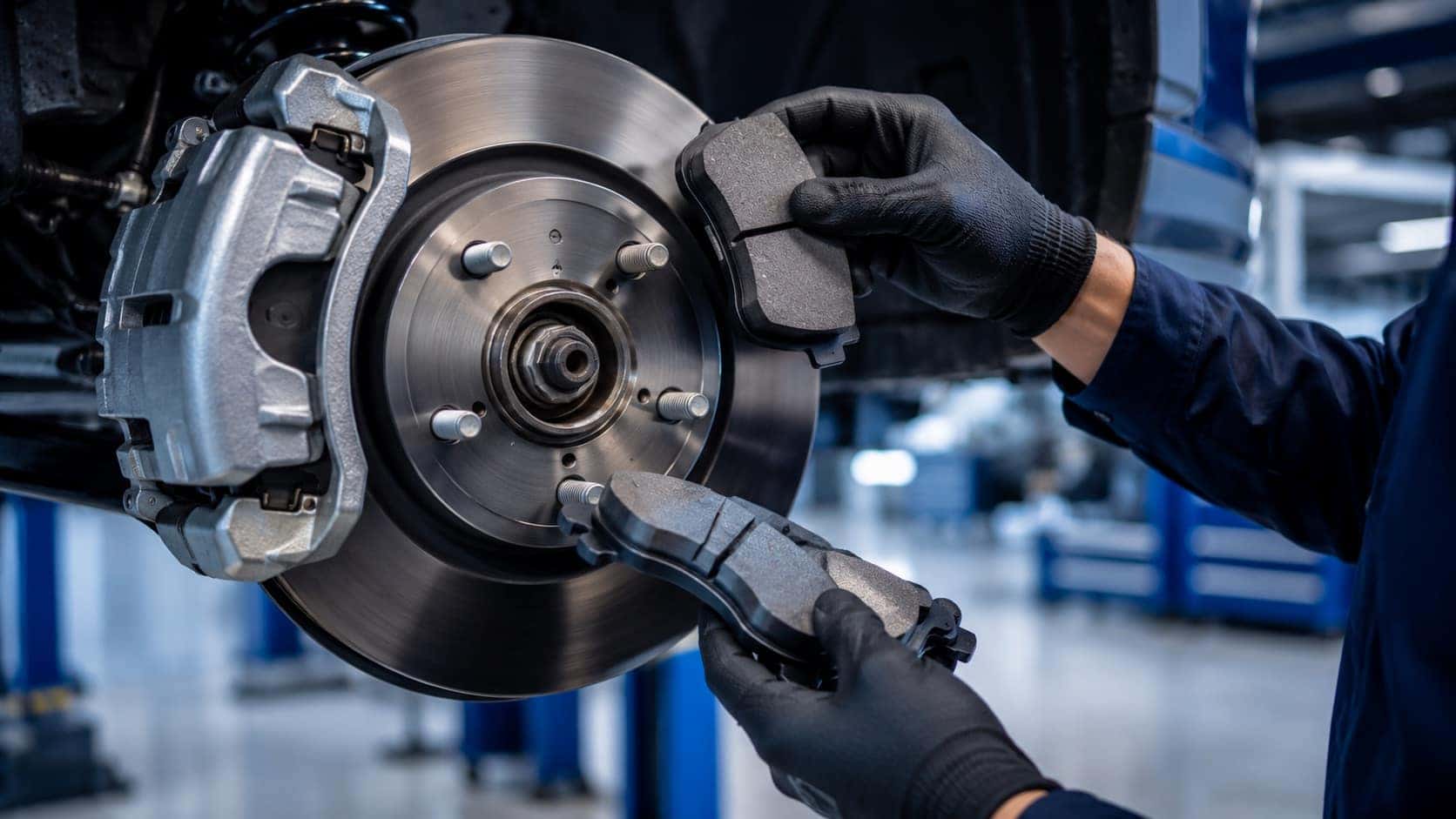
When you press the brake pedal, hydraulic pressure pushes brake pads against a spinning rotor at each wheel. The friction slows the wheel — and converts your vehicle’s motion into heat. Over thousands of stops, the pads wear thin and the rotors gradually lose material. Every component in that system, from the pads and rotors to the fluid and calipers, is engineered to work together, which is why Hyundai-specific parts and procedures matter.
Drivers in Merrillville, Crown Point, Hobart, and Schererville put real demand on their brakes with daily stop-and-go traffic along Broadway and US-30. That kind of driving wears brakes faster than steady highway miles, making regular inspections especially important here in Northwest Indiana.
What Are the Warning Signs My Brakes Need Service?
Your Hyundai will usually warn you before brakes become unsafe. If you notice any of these, schedule an inspection at Webb Hyundai Merrillville right away.
- Squealing or screeching: Many pads have a built-in wear indicator that chirps when they get low.
- Grinding: A metallic grinding sound often means the pads are gone and metal is contacting the rotor — address this immediately.
- Longer stopping distances: The car takes more room to stop than it used to.
- Vibration or pulsing in the pedal: Often a sign of warped or unevenly worn rotors.
- Soft or spongy pedal: Can indicate air or moisture in the brake fluid.
- Pulling to one side when braking: May point to a caliper or uneven wear issue.
- Brake warning light: Always have this checked promptly.
How Often Should Hyundai Brakes Be Serviced?
There’s no single mileage figure for brakes the way there is for oil, because wear depends heavily on how and where you drive. As a guideline, brake pads commonly last anywhere from 25,000 to 70,000 miles, but city driving, towing, and hilly routes shorten that span. The most reliable approach is a regular inspection — which is why Webb Hyundai Merrillville includes a brake check in every multi-point inspection and shows you the actual pad-thickness measurements.
| What We Check | What It Tells Us |
|---|---|
| Pad thickness | How much friction material remains before replacement is needed |
| Rotor condition | Whether rotors can be resurfaced or need replacement |
| Brake fluid | Moisture content and whether a flush is due |
| Calipers and hardware | Proper movement, leaks, and even wear |
| Brake lines and hoses | Cracks, corrosion, or leaks |
Do I Need Just Pads, or Rotors Too?
It depends on the condition of your rotors when the pads are replaced. If the rotors are still within Hyundai’s thickness specification and aren’t warped, they can sometimes be resurfaced and reused. If they’re too thin, scored, or warped, they need replacement to brake safely and avoid pedal vibration. Replacing worn pads promptly is the best way to protect your rotors — waiting until you hear grinding almost always means rotor damage and a larger bill. Our service advisors will show you the measurements and explain your options before any work begins.
Why Does Brake Fluid Need to Be Flushed?
Brake fluid is hydroscopic, meaning it absorbs moisture from the air over time. Moisture lowers the fluid’s boiling point and can cause a soft pedal or reduced braking performance, especially under heavy or repeated braking. It also promotes internal corrosion. Hyundai specifies brake-fluid service intervals for this reason. At Webb Hyundai Merrillville we test your fluid’s condition and recommend a flush when it’s due, using the correct Hyundai-specified fluid for your vehicle.
How Is Braking Different on an IONIQ EV or Hybrid?
Hyundai EVs and hybrids use regenerative braking, which captures energy and slows the vehicle using the electric motor before the friction brakes engage. The upside for IONIQ 5, IONIQ 6, and Tucson and Santa Fe Hybrid owners is that pads and rotors often last longer because they do less work. The catch is that brakes used less frequently can develop surface rust and uneven wear, so regular inspection remains important. Our technicians are trained on Hyundai’s regenerative braking systems and will check both the friction components and the regenerative system at your service visit.
How Do I Schedule Brake Service?
Booking Brake Service at Webb Hyundai Merrillville — Step by Step
- Open our online service scheduler — available 24 hours a day, 7 days a week.
- Select your vehicle — enter your Hyundai’s year, make, model, and trim.
- Choose “brake inspection” or “brake service” — or describe any noise or symptom in the comments.
- Pick a date and time — view real-time availability and choose the slot that fits.
- Confirm your appointment — you’ll receive a confirmation email and a reminder.
- Arrive at our service drive in Merrillville, and our team will take it from there.
Prefer to call? Reach our service team at (219) 736-2277 during business hours. If you’re hearing grinding, don’t wait for an appointment — call us right away.
Does Brake Service Protect My Warranty?
Brake pads and rotors are normal wear items and aren’t covered the same way as mechanical components, but maintaining them at an authorized Hyundai dealer keeps a documented service history that supports your overall warranty and resale value. Webb Hyundai Merrillville uses genuine Hyundai-specification brake components and records every visit in Hyundai’s system. If your braking issue turns out to be a covered component rather than normal wear, our team will identify that and handle any qualifying warranty repair appropriately.
Key Takeaways
- Brakes wear gradually; regular inspection is more reliable than waiting for a warning sound.
- Squealing, grinding, vibration, longer stops, and a soft pedal all warrant a brake check.
- Pad life varies widely (roughly 25,000–70,000 miles) depending on driving conditions.
- Replacing pads promptly protects your rotors and keeps repair costs lower.
- Brake fluid absorbs moisture over time and needs periodic flushing per Hyundai’s schedule.
- IONIQ EVs and hybrids use regenerative braking, which extends pad life but still requires inspection.
- Schedule online any time or call (219) 736-2277 — and don’t drive on grinding brakes.
Frequently Asked Questions
How long does brake service take at Webb Hyundai Merrillville?
A brake inspection is quick and often included in a multi-point inspection. A pad replacement typically takes a couple of hours depending on whether rotors also need attention. Your service advisor will confirm timing before work begins.
Is it safe to keep driving if my brakes are squealing?
Squealing usually means the pads are getting low and should be inspected soon. Grinding is more serious and means you should stop driving and call us right away, because metal-on-metal contact can quickly damage your rotors and reduce stopping power.
Can I just replace the front brakes?
Often yes — front brakes typically wear faster because they handle more of the stopping force. Our technicians measure all four corners and recommend service only where it’s actually needed, then show you the measurements.
Why does my brake pedal vibrate when I stop?
Pedal or steering-wheel vibration during braking often points to warped or unevenly worn rotors. We’ll measure the rotors and let you know whether they can be resurfaced or need replacement.
Do EV and hybrid brakes need service if regenerative braking does most of the work?
Yes. While regenerative braking extends pad life, brakes used infrequently can develop surface rust and uneven wear. Regular inspection keeps the system working properly, and our technicians are trained on Hyundai’s regenerative braking systems.
Brake With Confidence — Schedule Service at Webb Hyundai Merrillville
Our factory-certified team will inspect your brakes, show you the real measurements, and recommend only what your Hyundai actually needs. Book online any time or give us a call.
Webb Hyundai Merrillville | Merrillville, IN | (219) 736-2277
0 comment(s) so far on Hyundai Brake Service in Merrillville: Signs, Timing, and What to Expect at Webb Hyundai Merrillville