



2026 Hyundai Tucson Hybrid: How It Saves You Money Every Mile with Fuel Efficiency and Ownership Benefits
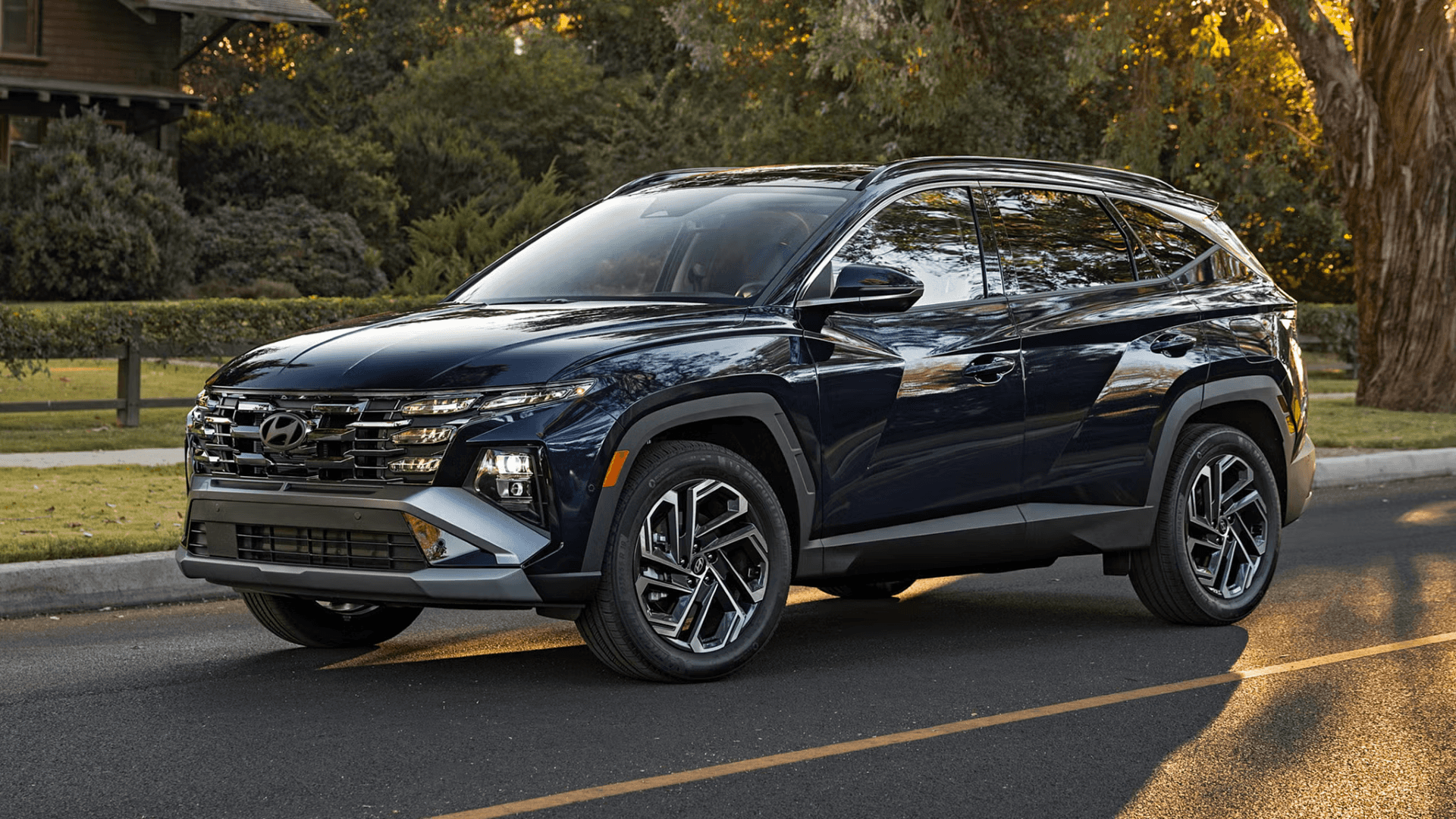
The 2026 Hyundai Tucson Hybrid promises lower fuel cost per mile and a quieter, more efficient commute by combining a turbocharged engine with electric motor assist and regenerative braking. This article explains exactly how the Tucson Hybrid delivers per-mile savings, what ownership costs look like over time, and which incentives can reduce your purchase price. Readers will get EPA-based fuel estimates, real-world regional examples for Northwest Indiana commutes, a line-item five-year ownership cost model, and step-by-step guidance on current tax credits and financing options. The analysis also compares the Tucson Hybrid to key rivals and highlights advanced features—like Hyundai SmartSense and cabin efficiency tech—that reduce operating costs and preserve resale value. Practical sections show how to verify incentives and where local dealership support can smooth purchase, financing, and service so the Tucson Hybrid’s efficiency translates into measurable dollars saved each year.
How Fuel Efficient Is the 2026 Hyundai Tucson Hybrid?
The 2026 Tucson Hybrid is a hybrid SUV that pairs an internal-combustion engine with an electric motor and battery to reduce fuel consumption, especially in city and stop-and-go driving. This combination lowers gallons burned per mile via electric-assist during acceleration, engine-off coasting, and regenerative braking recapture, producing measurable savings compared with conventional gasoline SUVs. The section below presents official EPA-based estimates and realistic regional projections, followed by a short calculator example showing annual fuel cost differences for a typical Northwest Indiana driver. Understanding these figures helps buyers compare trims and drivetrain options when evaluating immediate and long-term savings. Next, the article breaks down published ratings and then explains how hybrid systems convert those ratings into everyday mileage improvements.
What Are the Official MPG Ratings and Real-World Fuel Economy?
This subsection summarizes typical EPA combined ratings by common Tucson Hybrid trims and converts them to realistic expectations for daily commutes, accounting for traffic patterns and mixed highway/city driving. The following table provides an estimated EPA combined figure and a conservative real-world combined MPG estimate that reflects urban commuting and light highway use; values are provided as estimates for planning and comparison purposes. Assumptions: average annual miles = 12,000; local average gas price used in examples is shown in the worked example below.
| Trim | EPA Combined (est.) | Real-World Combined (est.) |
|---|---|---|
| Tucson Hybrid Blue SE (FWD) | 39 MPG | 35 MPG |
| Tucson Hybrid SEL (AWD) | 38 MPG | 34 MPG |
| Tucson Hybrid Limited (AWD) | 37 MPG | 33 MPG |
| Tucson Hybrid Plug-in (PHEV) | 80 MPGe / 33 mpg (gas only) | 60 MPGe / 30 mpg (mixed use) |
This table shows that EPA combined ratings translate to slightly lower real-world numbers once traffic and climate are considered. For example, using 12,000 miles per year and a gas price estimate of $3.50 per gallon (as a planning figure for 11/2025), a Tucson Hybrid at a realistic 35 mpg uses about 343 gallons, saving roughly 86 gallons and $301 per year in fuel. Those per-year savings compound over multiple years and are larger for drivers with heavier city driving.
How Does Hybrid Technology Maximize Fuel Savings Every Mile?
Hybrid systems reduce fuel consumption through several coordinated mechanisms that operate without changing driver behavior dramatically. Regenerative braking captures energy normally lost during deceleration and returns it to the battery, reducing alternator and engine load and lowering fuel use in stop-and-go traffic. Electric-assist provides torque during acceleration so the gasoline engine runs at lower loads more often, and idle-stop strategies shut the engine off at rest, cutting wasted fuel during long light cycles. Together these systems improve per-mile efficiency especially on short trips and urban commutes, which is why Northwest Indiana drivers with mixed highway and city routes typically see the largest percentage gains. The next section quantifies how those technologies feed into five-year ownership cost models and repair/maintenance expectations.
This process of capturing energy during deceleration is a key component of hybrid efficiency.
What Are the Long-Term Ownership Costs of the 2026 Hyundai Tucson Hybrid?
This section breaks down projected ownership costs over one, three, and five years, covering fuel, scheduled maintenance, insurance, depreciation, and finance interest. The analysis uses clear assumptions—12,000 miles per year, an estimated local gas price of $3.50/gal for 11/2025 planning, and typical insurance differentials for hybrid models—and shows how hybrid fuel savings offset slightly higher purchase prices in many scenarios. It also explains warranty coverage and dealer service programs that reduce unexpected repair exposure and help preserve the vehicle’s resale value. After the cost table, the content outlines maintenance differences specific to hybrids and highlights how consistent dealer service lowers total out-of-pocket ownership costs.
How Do Fuel, Maintenance, and Insurance Costs Compare Over 5 Years?
Below is an ownership-cost table summarizing estimated line items across 1-, 3-, and 5-year horizons; figures are rounded estimates intended for planning and comparison. Assumptions: 12,000 miles/year, Tucson Hybrid real-world combined 35 MPG, conventional rival 28 MPG, gas price $3.50/gal, average maintenance & repair premiums adjusted for hybrid systems.
| Ownership Cost Component | 1-Year Estimated Cost | 3-Year Estimated Cost | 5-Year Estimated Cost |
|---|---|---|---|
| Fuel (Tucson Hybrid) | $1,029 | $3,086 | $5,144 |
| Fuel (Conventional rival) | $1,500 | $4,500 | $7,500 |
| Maintenance & Scheduled Service | $450 | $1,400 | $2,400 |
| Insurance (estimate premium delta) | $1,100 | $3,300 | $5,500 |
| Depreciation (estimated) | $3,000 | $8,500 | $12,500 |
| Loan Interest (depending on rate) | $800 | $2,200 | $3,600 |
| Total (Hybrid, est.) | $6,379 | $19,986 | $36,644 |
This table highlights that fuel savings alone can be several hundred dollars per year versus a conventional counterpart, and over five years those savings materially reduce the total cost of ownership. Sensitivity: higher annual mileage or higher local gas prices increase the hybrid’s advantage, while lower mileage reduces it. Next, the article details warranty terms and dealer service benefits that further limit repair exposure and can improve resale value.
What Warranty and Service Benefits Reduce Your Total Cost?
Hyundai’s warranty structure typically includes a 5-year/60,000-mile limited basic warranty and a 10-year/100,000-mile powertrain warranty that covers key hybrid components; these coverages reduce the owner’s exposure to high-cost repairs in the early ownership years. Dealer service programs—including scheduled maintenance bundles and certified hybrid technician support—help ensure battery health, proper regenerative braking calibration, and OEM parts usage, which preserve fuel economy and long-term resale value. Webb Hyundai Merrillville, as a full-service Hyundai dealership serving Northwest Indiana, offers appointment scheduling, financing facilitation, and parts support that streamline maintenance and may reduce downtime. Consistent OEM service also supports higher trade-in values, which in turn offsets depreciation costs shown earlier and protects the buyer’s overall investment.
Which Tax Credits and Financial Incentives Can Lower Your Purchase Price?
This section summarizes federal and state incentive landscapes relevant to hybrid and plug-in hybrid vehicles as of 11/2025, highlights dealer incentives and common financing offers, and provides a practical checklist for verifying eligibility and claiming benefits. The following table lists incentive types, typical eligibility criteria to check, and the potential maximum value buyers might expect; readers should use the table as a guide and consult official resources or dealership financing specialists for final determination. After the table, the section explains how dealer financing or special rates can further lower monthly payments and total interest paid.
What Federal and Indiana State Tax Credits Are Available for the Tucson Hybrid?
The federal incentive landscape varies by propulsion type: full hybrids generally do not qualify for the federal Clean Vehicle Credit, while plug-in hybrids may qualify for larger federal tax credits based on battery capacity and meeting assembly rules. State incentives differ by state—Indiana’s direct incentives for hybrids are limited, but buyers should check current state programs and utility rebates that can apply to plug-in models. Below is a concise incentive summary table for quick reference; each entry lists the incentive, common eligibility checks, and a representative maximum amount to expect, noting that these numbers are subject to change and require confirmation.
| Incentive | Eligibility | Typical Max Amount (representative) |
|---|---|---|
| Federal Clean Vehicle Credit (PHEV) | Vehicle meets battery & assembly rules; purchaser income/price caps apply | Up to $7,500 |
| Federal Hybrid-specific incentives (varies) | Generally not available for full hybrids | $0 |
| Indiana state rebates or utility offers | State or utility program enrollment and vehicle type | Varies by program |
| Dealer incentives / lease credits | Model-year promotions or dealer stock clearing | Varies by dealer offer |
Buyers should request incentive verification from their dealer and tax professional prior to purchasing to confirm eligibility and documentation requirements. The next subsection explains how financing structures and certain tax rules can impact monthly payments and overall cost.
How Do Financing Offers and Loan Interest Deductions Save You Money?
Dealer financing specials—such as promotional low-APR financing or cashback offers—lower the total interest paid and can reduce monthly payments, effectively decreasing the vehicle’s net cost over the loan term. A simple example: financing $30,000 at 1.9% APR over 60 months yields a lower total interest cost than financing the same amount at 5.9% APR; reduced interest compounds the hybrid’s operating savings into lower lifetime ownership expense. In some tax years, qualifying taxpayers may be able to deduct certain auto-related interest expenses under narrow circumstances; buyers should consult a tax advisor for their specific situation. Webb Hyundai Merrillville can assist customers by presenting current financing offers and walking through documentation needed to apply incentive and financing credits, helping buyers access applicable savings and navigate the lead generation and purchase process.
How Does the 2026 Hyundai Tucson Hybrid Compare to Other Hybrid SUVs in Savings?
This section provides a head-to-head look at how the Tucson Hybrid stacks up against major rivals on fuel economy, ownership cost, and feature sets that affect long-term value. Comparison focuses on real-world fuel costs, five-year ownership differentials, and warranty/feature factors—elements that influence which model produces greater savings for specific buyer profiles. The section then breaks into two focused matchups: Toyota RAV4 Hybrid and Honda CR-V Hybrid, offering clear pros/cons and which buyer each model suits best. After comparisons, readers receive a short list of decision criteria to apply when choosing a hybrid SUV for maximum savings.
How Does the Tucson Hybrid’s Fuel Economy and Cost Stack Up Against the Toyota RAV4 Hybrid?
The Tucson Hybrid’s real-world combined MPG estimates are generally competitive with the Toyota RAV4 Hybrid; differences often come down to drivetrain choices (FWD vs. AWD), vehicle weight, and tuning for efficiency versus performance. In many scenarios, the Tucson Hybrid achieves a few MPG advantage in FWD trims, while AWD trims narrow that gap. Ownership cost deltas are usually driven by depreciation and dealer incentives rather than fuel alone. Below is a short comparison list that highlights key comparative points for savings-focused buyers.
- Fuel Economy: Tucson FWD trims often deliver competitive combined MPG versus RAV4; real-world city driving favors the hybrid with better regenerative efficiency.
- Ownership Costs: Depreciation and dealer incentives often determine long-term savings more than a small MPG delta.
- Feature Influence: Warranty terms and local dealer service capabilities affect maintenance exposure and resale value.
These points clarify that buyers prioritizing lowest long-term cost should compare local pricing, incentives, and trade-in projections in addition to MPG figures, rather than relying on EPA numbers alone.
What Are the Ownership and Feature Differences Compared to the Honda CR-V Hybrid?
When comparing to the Honda CR-V Hybrid, differences in standard features, maintenance expectations, and warranty coverage can shift ownership economics. The CR-V Hybrid often emphasizes reliability and resale strength, while the Tucson Hybrid includes comprehensive advanced safety and convenience features that can reduce accident risk and improve owner satisfaction. Considerations that affect long-term savings include brake and battery longevity, standard equipment that lowers optional add-on costs, and local service availability for hybrid systems. Buyers should weigh the balance between expected resale, included features, and local dealer support when projecting five-year costs and practical ownership value.
What Advanced Features Enhance the Tucson Hybrid’s Value and Driving Experience?
The Tucson Hybrid bundles technology and safety systems designed to reduce risk, improve driver efficiency, and protect resale value—elements that translate into long-term economic benefits. This section summarizes high-impact safety and interior technologies, explains how they cut ownership costs or improve efficiency, and lists performance attributes that deliver everyday driving satisfaction without a major fuel penalty. Following this overview are two focused subsections on SmartSense safety benefits and cabin/connectivity features that support driver comfort and efficient operation.
How Do SmartSense Safety Features Contribute to Long-Term Savings?
Hyundai SmartSense includes active systems—such as forward collision avoidance, lane-keeping assist, and adaptive cruise control—that mitigate crash risk and can lower insurance costs over time through proven accident reduction. Avoiding collisions reduces repair bills and downtime, and vehicles with robust standard safety tech can qualify for insurance discounts in some markets. These features also support lower long-term ownership costs by minimizing out-of-pocket repair exposure and preserving resale value. For Northwest Indiana drivers, consistent use of driver-assist features reduces the probability of minor accidents in suburban traffic, which helps protect both personal finances and insurance premiums.
What Interior and Connectivity Technologies Improve Comfort and Efficiency?
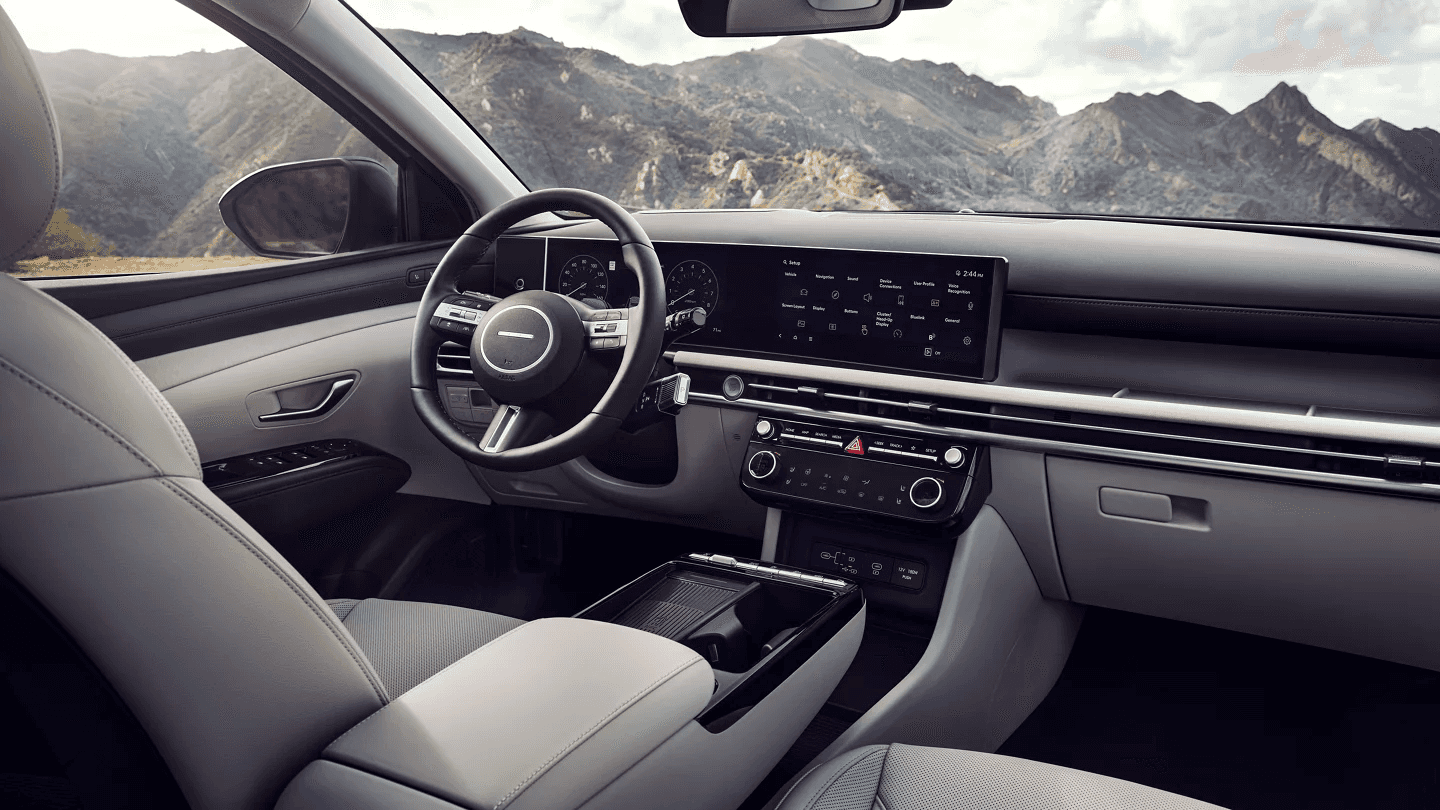
Cabin and connectivity technologies in the Tucson Hybrid—including efficient climate systems, smart HVAC controls, and intuitive infotainment—improve driver comfort and indirectly contribute to fuel efficiency by reducing behaviors that increase consumption (excessive idling, aggressive driving). Heat-pump HVAC options, efficient seat heating, and driver information displays encourage moderate climate settings and informed driving that preserves battery assist and fuel economy. Infotainment and telematics that provide route optimization or driving-efficiency feedback help drivers maintain efficient habits over time, further reducing operating costs and enhancing resale desirability by keeping the vehicle in better condition.
Why Should Northwest Indiana Drivers Choose Webb Hyundai Merrillville for Their Tucson Hybrid?
Northwest Indiana buyers benefit from a local, full-service Hyundai dealership that provides vehicle selection, financing facilitation, and after-sales support designed to preserve the hybrid’s savings over time. Webb Hyundai Merrillville is a full-service Hyundai dealership serving Northwest Indiana focused on selling new and used Hyundai vehicles, providing financing, and offering Hyundai service and parts. The dealership’s local inventory availability and financing expertise simplify comparing trims, confirming incentives, and arranging test drives so buyers can select the Tucson Hybrid configuration that maximizes fuel and ownership savings. Below are practical steps Northwest Indiana drivers can take when evaluating Tucson Hybrid availability and service options.
What Special Offers and Inventory Are Available at Webb Hyundai Merrillville?
If you want to compare available Tucson Hybrid trims and current promotions in your area, contact Webb Hyundai Merrillville to learn about local inventory, model availability, and dealer incentives that may affect net purchase price and monthly payments. The dealership can facilitate appointments for test drives, walk through financing options, and help verify eligibility for federal and state incentives, making the purchase process more transparent and efficient. For buyers prioritizing long-term savings, the dealer’s role in matching incentives, presenting financing structures, and scheduling pre-purchase inspections ensures the chosen Tucson Hybrid aligns with projected ownership economics. Taking these practical steps helps convert manufacturer efficiency into realized dollars saved over ownership.
How Does Local Service Support Ensure Your Hybrid’s Longevity and Savings?
Regular, manufacturer-recommended service performed by trained hybrid technicians prevents efficiency losses caused by deferred maintenance and preserves regenerative braking calibration and battery performance. Webb Hyundai Merrillville’s service and parts capabilities help owners stay on the recommended maintenance schedule and access OEM parts that protect performance and resale value. Scheduled maintenance bundles and service reminders reduce the likelihood of neglected upkeep, which in turn keeps fuel economy near its designed levels and slows depreciation. To preserve the Tucson Hybrid’s cost advantages, consistent local servicing and OEM parts are essential components of long-term savings.
0 comment(s) so far on 2026 Hyundai Tucson Hybrid: How It Saves You Money Every Mile with Fuel Efficiency and Ownership Benefits